Vijayadashami (Dasara): Why We Celebrate It and What It Means
By Aashish Gajangi ·
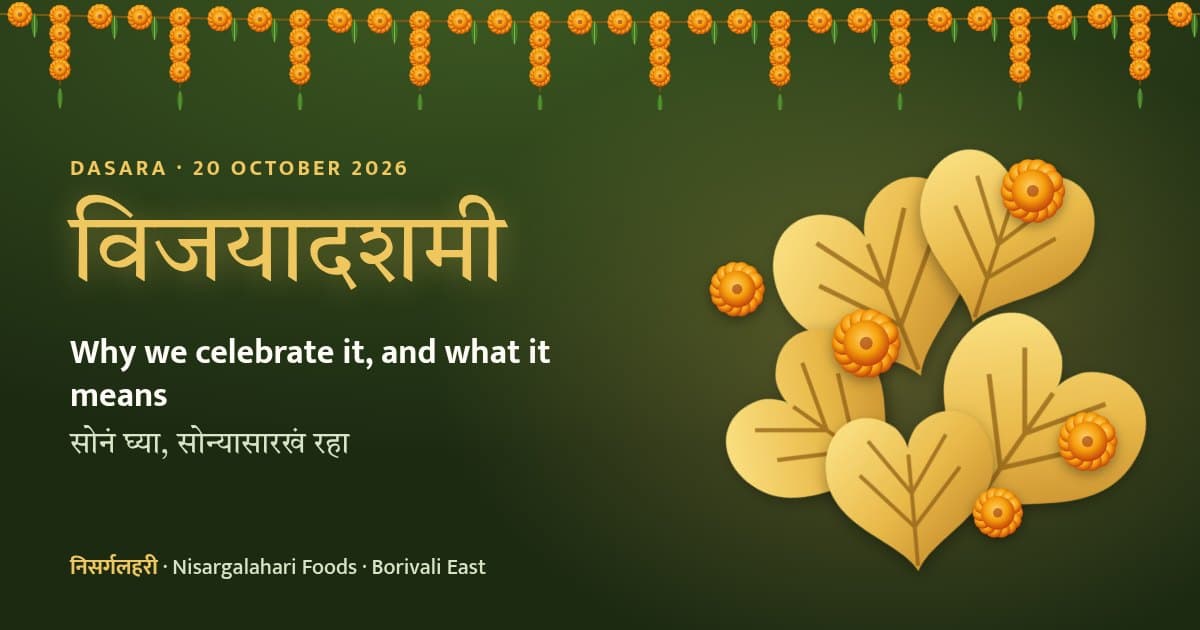
After nine nights of Navratri comes a bright tenth day. In Maharashtra it is the morning of marigold torans on every door, apta leaves in every hand and the quiet bowing of children before their elders. This is Vijayadashami, which most of us simply call Dasara.
In 2026, Vijayadashami falls on Tuesday, 20 October, according to most calendars. Here is why the day is celebrated, what its customs mean, and why a handful of green leaves is called gold.
What the name means
Vijaya means victory and dashami means the tenth day. Vijayadashami is the tenth day of the bright half of the month of Ashwin, the day that follows the nine nights of Navratri. "Dasara" comes from the same idea of the tenth day.
Almost every story told about this day is a story of victory: of good over evil, of patience over arrogance, of what is right over what is easy.
The stories behind the day
Different parts of India remember Vijayadashami through different stories. They are not rivals; together they explain why the day carries so much meaning.
Rama's victory over Ravana
In the Ramayana, Rama defeats Ravana and wins back Sita. Across North India this is the heart of Dussehra, closing nights of Ramlila with the burning of Ravana's effigy.
Durga's victory over Mahishasura
After nine nights of battle, the goddess Durga destroys the buffalo demon Mahishasura. Navratri honours her nine forms, and the tenth day marks her victory.
The Pandavas and the shami tree
Before their final year in disguise, the Pandavas hid their weapons in a shami tree. When the time came, Arjuna took them back and won. The shami is worshipped on Dasara for this reason.
Kautsa and the rain of gold
A young student needed gold coins to pay his teacher's fee. The god of wealth, Kubera, made gold fall on a tree, and that tree's leaves became the "gold" Maharashtra shares on Dasara.
Ashoka and Dhammachakra Pravartan Din
Emperor Ashoka is said to have embraced Buddhism on this day. On Ashoka Vijayadashami in 1956, Dr B. R. Ambedkar did the same at Nagpur.
Apta leaves: the gold of Dasara
The custom most special to Maharashtra is the giving of apta leaves. The apta (Bauhinia racemosa) has a leaf shaped like two joined hearts. On Dasara, families bring home small branches, offer the leaves at home, and then give them to elders, friends and neighbours as sona, gold.
The story behind it is told in more than one way. In the version most Marathi families know, Kautsa, a student of the sage Varatantu, had to give his teacher a fee of fourteen crore gold coins. He asked for help, and Kubera, the god of wealth, rained gold coins on an apta tree. Kautsa took only what he needed, and the people of the town gathered the rest. Another retelling places the story in Ayodhya with King Raghu, an ancestor of Rama. The details change from home to home, but the meaning does not: prosperity is something you share, not something you keep.
That is why, while handing over the leaves, people say:
सोनं घ्या, सोन्यासारखं रहा! (Take this gold, and stay as precious as gold.)
How Maharashtra celebrates Dasara
- Marigold torans and mango leaves are tied over the door, and a rangoli is drawn at the entrance.
- The apta and shami trees are worshipped, and the apta leaves are brought home.
- Seemollanghan, crossing the boundary of the village or town, is done in the evening, often with a visit to a temple. It once marked kings setting out beyond their borders.
- Shastra puja: tools of work are cleaned and worshipped, from weapons in the old days to vehicles, machines, account books and pens today.
- Children worship books and slates as a form of the goddess Saraswati.
- Younger people touch the feet of elders and give them apta leaves, and elders give their blessings in return.
- Many families buy gold, a vehicle or a home, or begin something new, because the day is considered auspicious.
- The festive meal often has shrikhand with puri, basundi or puran poli, and sweets are shared with everyone who visits.
One of the three and a half muhurtas
In the Marathi calendar, Vijayadashami is one of the sade teen muhurta, the "three and a half" most auspicious days of the year. The other full days are Gudi Padwa and Akshaya Tritiya, and the half is Balipratipada at Diwali. On these days no separate auspicious time needs to be looked up, which is why so many families choose Dasara for a new business, a griha pravesh or a first purchase of gold.
Dhammachakra Pravartan Din
For many families in Maharashtra, this day has a second, deeply important meaning. On 14 October 1956, which was Ashoka Vijayadashami, Dr Babasaheb Ambedkar embraced Buddhism at Deekshabhoomi in Nagpur, together with hundreds of thousands of followers. Every year, on Ashoka Vijayadashami and on 14 October, huge numbers of people gather at Deekshabhoomi to mark Dhammachakra Pravartan Din.
Dasara across India
The same day looks very different from region to region. In much of North India, Ramlila ends with Ravana's effigy going up in flames. In Bengal it is Bijoya Dashami, when Durga's idol is immersed and families greet each other. In Karnataka, Mysuru's Dasara procession is famous across the world. And in Himachal Pradesh, the Kullu Dussehra begins on this day. What all of them share is the feeling of a new start after a victory.
What the day asks of us
Vijayadashami is not only about stories of the past. It is a day to put away what held us back, to respect the tools and skills that feed our families, to bow to our elders, and to share whatever good we have, even if it is only a green leaf. Few festivals say so much with so little.
Dasara · Tuesday, 20 October
विजयादशमीच्याहार्दिक शुभेच्छा
Apta leaves for gold, marigolds on the door, and something sweet for everyone who visits.
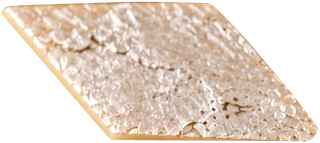
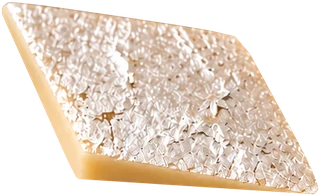
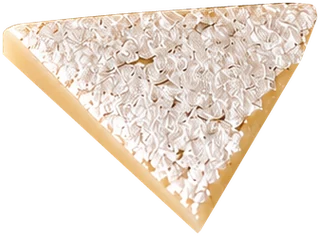
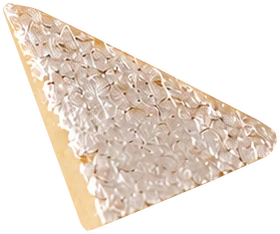
From our family kitchen at Hanuman Tekdi, Borivali East, we wish you and your family a very happy Vijayadashami. If you are planning sweets for the day, read about what we are making for Dasara.